
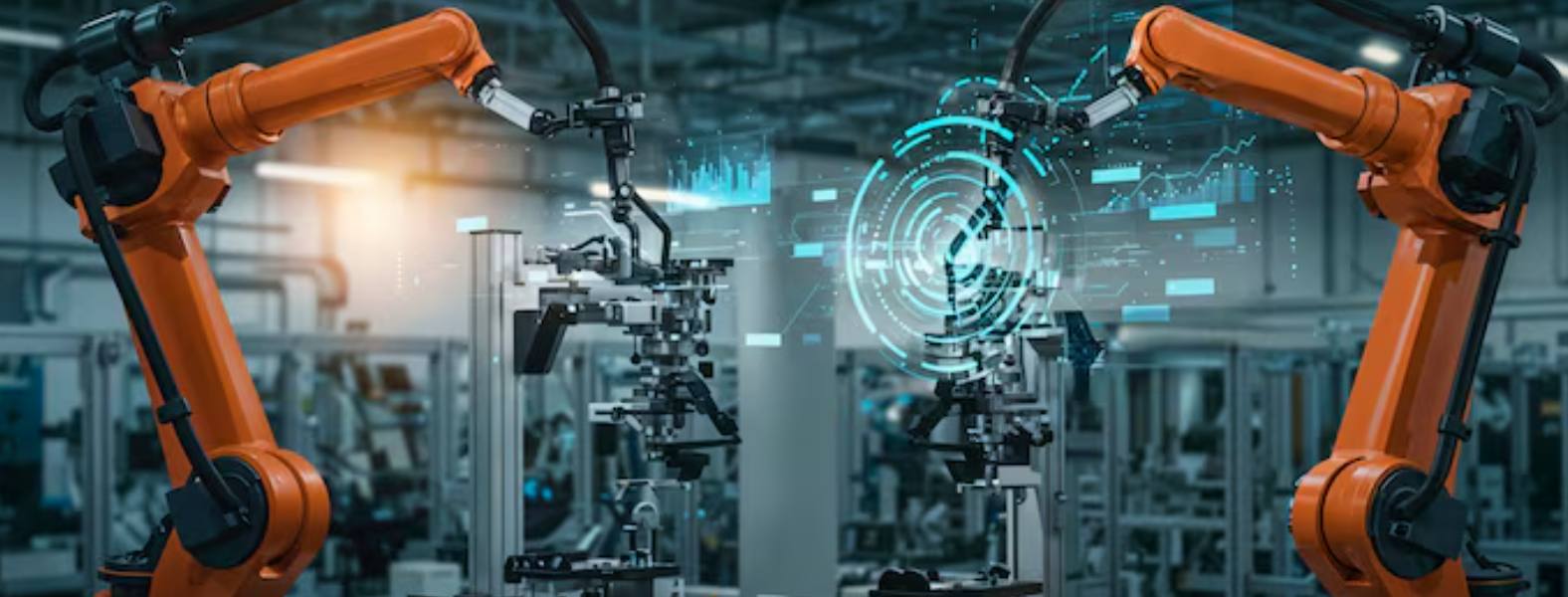
Automation has become a central element of modern industrial production. What once depended almost entirely on manual operation can now involve sensors, programmable controls, robotics, data analysis, and interconnected machinery working together. The objective is not simply to reduce the number of human tasks. Modern automation is increasingly focused on improving consistency, safety, efficiency, flexibility, and decision-making.
As industrial operations become more complex, organizations need greater control over processes while responding to changing production requirements. Automation provides a way to coordinate these demands. From material handling and assembly to temperature control and quality inspection, automated systems can perform repetitive activities with a high degree of consistency. The National Institute of Standards and Technology notes that manufacturing automation can improve productivity, production capacity, quality, worker safety, and operational decision-making.
Understanding Industrial Automation
Industrial automation refers to the use of control systems, machinery, sensors, software, and other technologies to operate or regulate industrial processes with reduced direct human intervention. The concept covers a broad range of applications rather than one particular technology.
A relatively simple automated system might control the temperature of an industrial furnace. A more sophisticated production environment could coordinate robots, conveyors, sensors, inspection equipment, and process controls across an entire manufacturing line.
The underlying principle is consistent: information is collected from the process, analyzed according to defined parameters, and used to trigger an appropriate action.
From Mechanical Control to Connected Systems
Industrial automation has developed considerably over the past several decades. Early systems relied heavily on mechanical controls and relatively simple electrical components. Programmable control technologies later made it possible to change production sequences without redesigning entire mechanical systems.
Today, automation increasingly incorporates connected sensors, digital control systems, machine vision, advanced analytics, and artificial intelligence. This evolution allows industrial processes to become more responsive to changing conditions.
The International Energy Agency highlights how digital technologies can collect and analyze operational data before using that information to change physical conditions automatically or through human intervention.
Improving Productivity and Production Consistency
One of the strongest arguments for industrial automation is its ability to support consistent production. Human workers naturally experience variations in speed, concentration, fatigue, and physical capacity. Automated equipment can repeat a programmed operation under controlled conditions for extended periods.
This does not mean automation eliminates the need for skilled workers. Instead, it can shift human effort toward activities requiring judgment, creativity, troubleshooting, supervision, and process improvement.
NIST identifies increased productivity, greater throughput, improved consistency, quality and yield, and the ability to move workers toward higher-value activities among the potential benefits of manufacturing automation.
Consistency is especially important when production involves strict tolerances. Automated equipment can perform the same sequence repeatedly while sensors monitor variables that could influence the result. When deviations occur, the system can potentially identify them earlier than a purely manual process.
Supporting Faster Production
Automation can also increase production capacity by allowing certain operations to continue for longer periods without the limitations associated with manual repetition. Automated material handling, for example, can move components between production stages according to predetermined schedules.
However, faster production is not automatically better production. Increasing speed without controlling quality, maintenance, energy consumption, or safety can create new problems. Effective automation therefore requires coordination between equipment performance and broader production objectives.
Automation and Workplace Safety
Safety is another important area where automation can contribute to industrial performance. Machines and robots can be used for hazardous, repetitive, or physically demanding activities that may expose workers to unnecessary risks.
According to the Occupational Safety and Health Administration, industrial robots are commonly used for tasks including material handling, assembly, welding, painting, and machine loading and unloading.
Automation can therefore separate people from certain dangerous environments. For example, automated equipment may handle materials at elevated temperatures or perform repetitive movements that could otherwise contribute to worker fatigue.
However, automation does not automatically make a workplace safe. Automated equipment introduces its own hazards. OSHA emphasizes that accidents involving robots frequently occur during non-routine activities such as programming, maintenance, testing, setup, and adjustment.
Designing Safety Into Automated Processes
Effective industrial automation requires safety to be considered during system design, installation, operation, and maintenance.
Machine guarding, controlled access, emergency stopping mechanisms, appropriate procedures, and worker training all remain important. OSHA also identifies lockout/tagout, machine guarding, personal protective equipment, and training among relevant considerations for workplaces using robotic systems.
The goal is not simply to automate a dangerous task. It is to create a system in which automated equipment and human workers can operate safely within clearly defined boundaries.
Reducing Energy and Resource Consumption
Automation also has an important role in industrial energy management. Industrial facilities can consume substantial amounts of electricity and fuel, particularly when processes involve heating, cooling, compressed air, motors, or continuous production.
Automated controls can monitor operating conditions and adjust equipment according to actual demand. Instead of maintaining the same output under every condition, a controlled process can respond to temperature, pressure, flow, production schedules, or other variables.
The IEA reports that digital technologies can improve industrial energy efficiency through advanced process controls, smart sensors, data analysis, and systems designed to detect equipment problems or optimize operations.
In thermal applications, for example, automated control can help regulate fuel input and operating temperatures. With propan automat, it can be reflected in the broader idea of automating systems that depend on controlled fuel delivery and process conditions. The important consideration is not the fuel alone, but how accurately the complete process can be monitored and controlled.
Making Efficiency Measurable
Automation becomes particularly valuable when combined with measurement. Sensors can track energy use and process variables continuously, creating information that can be analyzed over time.
This makes it easier to identify abnormal consumption, inefficient operating conditions, or recurring process problems. The IEA's recent work on industrial energy management emphasizes systematic approaches to efficiency and notes that digitalization and artificial intelligence can expand the speed and scale of energy-management improvements.
Predictive Maintenance and Equipment Reliability
Traditional maintenance strategies often rely on fixed schedules or repairs after equipment failure. Automation and connected monitoring can support a more predictive approach.
Sensors can monitor vibration, temperature, pressure, electrical characteristics, flow rates, or other indicators of equipment condition. When these measurements change significantly, they can provide an early indication that maintenance may be necessary.
The advantage is practical. A developing problem can potentially be addressed before it causes an unexpected production interruption.
Predictive maintenance does not eliminate maintenance teams. Instead, it provides them with better information about where attention may be required and when intervention is most appropriate.
Improving Quality Control
Quality assurance is another area where automation can make a substantial difference. Automated inspection systems can evaluate products according to predefined criteria, while sensors and machine vision can identify dimensional, surface, or assembly-related deviations.
When inspection data is connected to production data, manufacturers can investigate not only which products failed but also what process conditions may have contributed to the failure.
This creates a feedback loop. Production generates data, inspection identifies results, and analysis helps operators understand the relationship between process conditions and product quality.
The result can be a more proactive approach to quality management rather than simply detecting defective products after production has finished.
The Growing Importance of Data
Modern automation increasingly depends on data. Sensors generate information about machines and processes, while control systems transform that information into operational decisions.
This creates opportunities beyond individual machines. Data from multiple stages of production can be analyzed together to identify bottlenecks, recurring inefficiencies, or relationships that may not be obvious from isolated observations.
Artificial intelligence can extend these capabilities by identifying patterns in large datasets and supporting optimization. The IEA notes that AI is already being applied to industrial production processes and can contribute to energy savings through process optimization.
Yet data alone does not guarantee better decisions. Measurements must be reliable, systems must be properly configured, and personnel must understand how to interpret the information.
Preparing the Industrial Workforce
Automation changes industrial jobs rather than simply removing human involvement. Workers increasingly need knowledge of digital controls, sensors, robotics, data interpretation, equipment diagnostics, and automated safety systems.
This creates an important workforce-development requirement. Employees who understand both the production process and the technology controlling it can play a critical role in maintaining reliable operations.
Training should therefore accompany automation projects from the beginning. Workers need to understand how systems behave during normal operation and what procedures apply during abnormal or maintenance conditions.
Implementing Automation Strategically
Automation works best when introduced as part of a clearly defined operational strategy. Organizations should first identify the processes where automation can produce meaningful improvements.
A repetitive task with measurable quality requirements may be an obvious candidate. A process characterized by high energy consumption, frequent errors, or significant safety exposure may also offer strong potential.
The technology should then be selected according to the actual process requirements. Automation for its own sake can create unnecessary complexity. Successful implementation depends on matching controls, sensors, machinery, software, and human expertise to a specific operational objective.
NIST's recent guidance on automation planning emphasizes establishing clear goals, identifying high-impact projects, preparing employees, and considering cybersecurity as part of long-term implementation.
Automation as a Foundation for Modern Industry
The role of automation in modern industrial processes extends well beyond replacing manual work. It provides a framework for controlling complex operations, collecting information, improving consistency, managing energy, supporting safety, and anticipating equipment problems.
The most effective industrial environments will likely be those that combine automated technology with human expertise rather than treating them as competing alternatives. Machines excel at repetition, measurement, and rapid responses. People remain essential for judgment, innovation, troubleshooting, strategic decisions, and understanding the broader context of production.
As industrial systems become more connected, automation will increasingly function as part of a larger ecosystem of data, machinery, energy management, and human decision-making. Its long-term value will therefore depend not simply on how many tasks can be automated, but on how intelligently automation is integrated into the entire production process.