
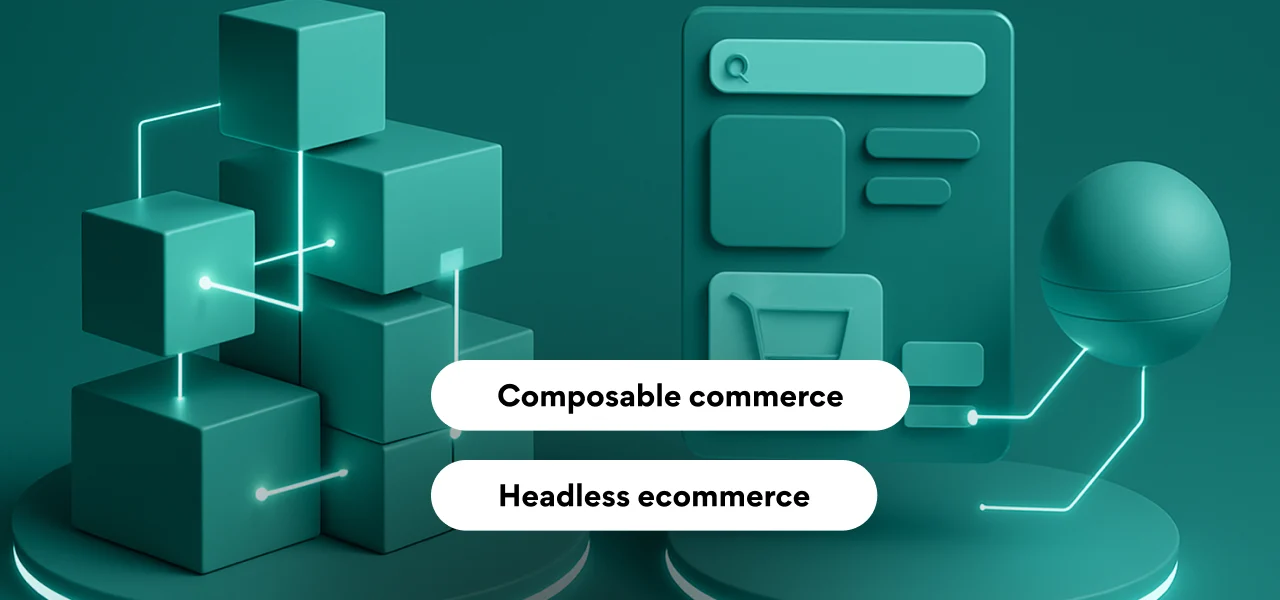
In 2026, monolithic platforms are increasingly becoming a factor hindering the development of e-commerce. Medium and large businesses are faced with strategic choices: accelerating time-to-market, building an omnichannel experience, or reducing dependence on a single vendor. Against this backdrop, comparing composable vs headless architectures is becoming one of the key questions in the industry. Both approaches offer freedom, but they solve different pain points and require different levels of business preparation.
What Headless Commerce Provides
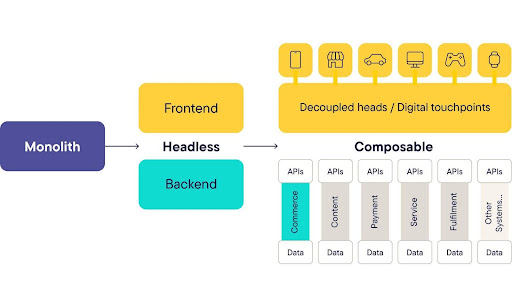
Headless Commerce is an architectural approach in which the frontend is completely separated from the backend and interacts with it via an API. The backend manages key business logic (product catalog, shopping cart, orders, and payments) while the frontend remains independent and can be implemented using any technology.
Key practical advantages:
- Pages load 40–70% faster.
- Conversion often increases by 10-35% due to perfect device adaptation.
- It’s easy to create different interfaces: website, app, and voice assistants.
- It’s easier to conduct A/B tests and customize the design without risking breaking the logic.
This is a good start if the main issue is site speed and user experience, and the current backend is still satisfactory.
What is Composable Commerce
The Composable approach implies modularity not only at the frontend level, but also across the entire backend architecture. Instead of using a monolithic platform, businesses create their own ecosystem, combining the best SaaS solutions for search, catalog management, payment processing, content management, and analytics.
Each component is updated separately, without impacting the others. According to reports, companies using Composable spend 35-55% less on support and introduce new features 2-4 times faster.
Key Differences
To understand which option is right for your business, here’s a direct comparison based on key parameters:
- Modularity. Headless decouples only the frontend; the backend can remain monolithic. Composable, however, makes the entire stack modular.
- Speed of Updates. Headless accelerates frontend development. Composable allows you to change any component in days, not months.
- Scalability. Headless reduces frontend costs. Composable delivers maximum savings in the long term.
- Complexity. Headless is easier to get started with. Composable requires more expertise and time initially, but delivers a faster return on investment.
These are the key differences between these architectural approaches, allowing you to choose the best option for your project.
When to Choose Headless or Composable
To make a final decision, consider the following:
- Headless is ideal if you already have a stable backend and want to quickly improve the customer experience. This option is suitable if you need to quickly update the frontend without changing platforms.
- Composable is the preferred choice for companies with revenues of $10–50 million+ planning expansion, launching B2B portals, or integrating AI. This architecture is relevant if you’re planning to enter new markets or want to build a stack of the best tools without compromise.
According to forecasts for 2026, over 70% of large companies will be required to migrate to Composable architectures. Headless remains an excellent starting point, but a true competitive advantage requires a comprehensive approach and an individual development strategy for each company.